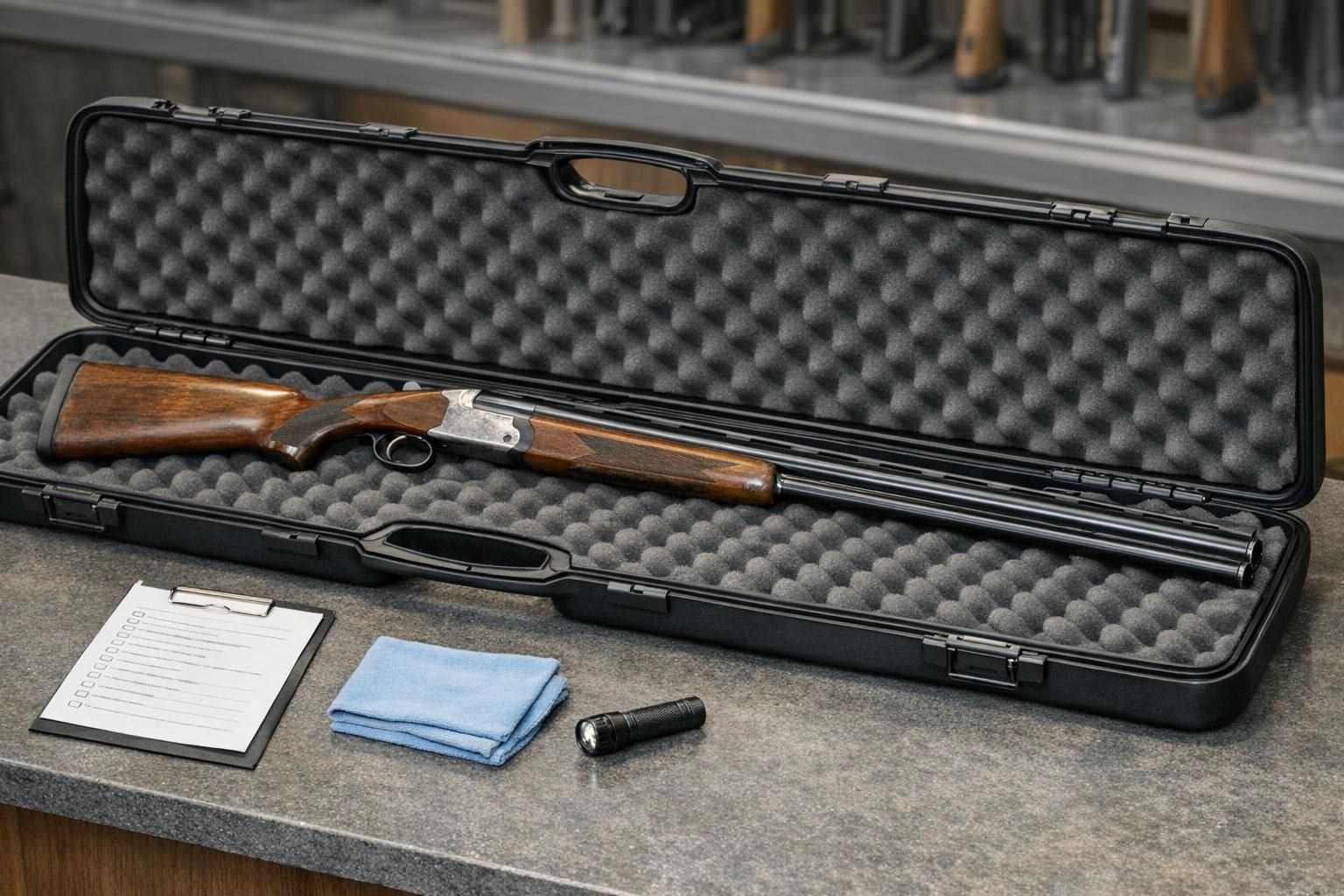
While a sporting firearm listing may appear to be okay at first glance, the condition terms 'good', 'very good' or even 'used' can be very vague. Cosmetical wear and tear that does not affect the firearm's operation need to be clearly identified from serious concerns that require inspection by a qualified professional. As an example, used sporting shotguns are commonly advertised for sale on various online classifieds by people looking to offload their seldom used firearm for weekend clay shooting. This type of firearm could be of great interest to Alex who is a casual shooter. The initial favorable impression needs to be turned into useful questions and documented before a buying decision is made.
Start by separating description from interpretation
Unless the seller has specified that he or she is using a certain grading system (e.g. NRA gun condition grading), the most important thing to do is to read the whole description first. Write down all the visible wear and tear mentioned in the description. Then, look for the word "good" and all the other condition terms and write down what you think they mean in the context of the rest of the description.
Alex first reads the full sporting firearm listing as opposed to just the headline condition. Even minor wear to stock marks, worn checkering, finish wear, corrosion etc. can influence the description as opposed to just saying 'excellent' without full explanation. A listing that openly states minor wear due to normal use is far more descriptive and accurate than one which states 'excellent'.
It is crucial that there is a distinction between functional wear and cosmetic wear made in the description of the sporting firearm for sale. For example, a small scratch in the finish is not the same as worn checkering, loose parts, broken or damaged gun controls, etc. Ask the seller for clarification if the listing does not make this distinction.
Turn vague wording into useful questions
A question that invites more than a simple yes or no is useful. For example: How long ago was this firearm last inspected? Have any parts been replaced (e.g. grip, stock, forearm, sights, action spring, trigger etc.)? Is there any visible sign of rust or pitting anywhere? Does the seller know of any malfunction or repair? Are all photographs of the listed firearm or are there others also for sale? Can the seller provide additional images of certain parts (e.g. bolt, firing mechanism, magazines, etc.) that cannot be seen from the photographs provided?
Even if you don't seek a gun with a perfect history then learning what you can be sure of and what remains unknown can help in making an informed decision as to whether or not the gun is suitable for your requirements. It is always best that such items are checked by a qualified professional.
Useful questions can include:
– Are there signs of corrosion (rust) around all stock & receiver areas and visible surfaces?
– Has the firearm been modified, refinished, repaired, or fitted with non-original parts?
– All controls, marks and accessories listed are accurately depicted in the pictures?
– Are there any known problems with the gun's operation, storage or maintenance?
– Can this gun be inspected at a suitable, licensed shooting facility prior to purchase?
A seller not being able to answer one or several questions does not automatically mean there are problems with the firearm. It merely informs the buyer of the degree of uncertainty he will be taking on board.
Use photographs as evidence, not reassurance
While photos do reveal certain aspects of a used gun's condition, there are limits to what they can show. For example, very bright photos can make surface scratches and discoloration nearly invisible. Also, a low-resolution photo can hide fine cracks, as well as signs of tool marks or pitting. And a seemingly clean gun is of little value in terms of determining internal condition and safety of operation.
Review the photographs against the written description for the firearm. Check for signs of surface wear and appearance in photographs taken from different angles. Will you be able to see the firearm's serial numbers? Are all condition sensitive areas clearly shown? Are all photographs of the same firearm? Are some images generic? If the only image is a side view from a distance, then assess the condition as preliminary.
For a used gun inspection the safest useful boundary is the visual review of the firearm by the buyer him/herself and a qualified, authorized, competent examination of the firearm by someone else. Avoid any attempt to function test a firearm, to disassemble it or to attempt to repair it based on information obtained online. Always treat a firearm as if it were loaded until you are absolutely sure otherwise, and use the procedures for inspection of firearms at ranges and from dealers that are appropriate in your locale.
Build a buying checklist around uncertainty
Write down advertised conditions, unanswered questions, visible wear, all listed parts, and any factor that could affect how you intend to use a firearm. How a seller describes the cosmetic originality of a gun can mean a lot to a collector, but mean very little to someone who only plans to occasionally take a firearm to a shooting range and go for a walk in the woods and shoot it from time to time.
In creating a checklist for the condition of a used firearm, Alex's questions also include practical issues for the buyer, e.g., the size of the firearm, whether it is to be stored at home and what cleaning supplies are available, who might provide Alex with instruction and/or supervision of firearm use, and what sorts of spares and services are available for the firearm. And although a low purchase price may be a critical factor for the buyer in deciding whether to purchase the firearm for ownership, that factor alone does not decide the issue of ownership.
An unknown point that the seller cannot answer will be marked as such and possibly be the subject for an inspection, a lower offer or even withdrawal from the purchasing process. The seller's urge to buy should not lead to Alex compromising on his requirements for verification.
Know when to pause the transaction
And while your common used firearm has a lot of unknowns about it (see above questions), some indicators warrant considerable caution. Things like unusual corrosion or cracks; altered or unknown markings; signs of an unsafe repair; the photos and listing description not matching; pressure to bypass normal inspection and transfer procedures. Get expert advice from a gunsmith, FFL holder or other qualified authority.
These legal requirements for buying, selling and transporting can change, often at short notice. These must be checked before buying and to find out what rules have to be followed, where the transfer can take place and who is authorized to conduct it. To buy responsibly means also having safe storage and to be able to handle and transport a firearm properly.
Uncertainty relating to a vague condition term is strongest when viewed with a healthy dose of skepticism. If after reading the description, viewing the pictures, having the seller answer questions, completing an inspection, and following all the proper procedures for a legal transfer, a buyer still feels unsure then it is probably best to wait for more information, look for a different listing, or both. That is responsible gun ownership in practice.